Georgia
Asia10 photographs
Ancient churches, wild wine, and a city that layers everything on top of itself.
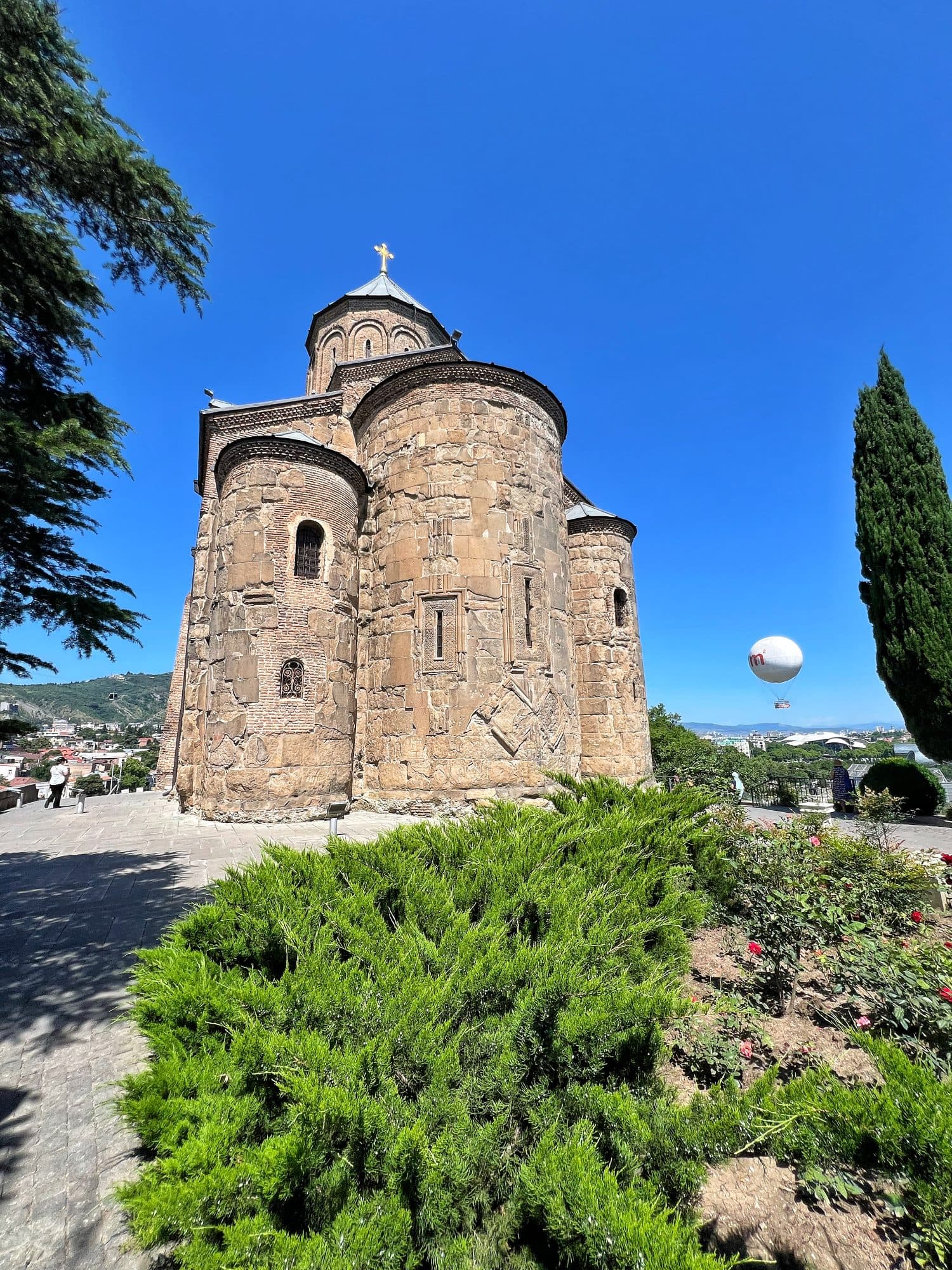
Georgia caught me off guard. I came expecting wine and old churches, and yes, those things are everywhere — but what I didn't expect was how the whole city of Tbilisi sits on top of itself, layer after layer: ancient stone, Soviet concrete, glass bridges, sulfur baths, all crammed into river gorges and hillsides. Standing at the Mtatsminda viewpoint, with the Kura winding through the city below and the Caucasus somewhere in the haze to the north, I kept thinking it looked like Kathmandu — chaotic, layered, alive — but warmer and drier and somehow more at ease with itself.
The food hit hard from the first meal. Khinkali are not just dumplings — eating them wrong (biting in before the broth runs out) is apparently a crime, and every Georgian will tell you so with great affection. The Adjarian khachapuri came out looking almost too dramatic on its wooden board, a boat of bread and molten cheese with a runny egg cracked into the middle. And then there was the wine, which Georgia claims to have invented eight thousand years ago. Standing in a winery holding a bottle of Kindzmarauli, the sweet red that Stalin supposedly loved, I decided not to argue.
What stayed with me most was the small stuff: the bronze tamada statue on the cobblestones raising his horn to nobody in particular, the Leaning Clock Tower that tilts at a confident angle and nobody seems to care, the giant bike sculpture rusting above a highway overpass with a glass hotel tower behind it. Georgia keeps putting strange, stubborn things in your path. The churches are ancient and the details in the carved bronze doors are extraordinary. You walk up to them and feel the weight of something very old and very sure of itself.